Ērānšahr and more

ī varzāvand az dūdag ī Kayān:
bē āvarem kēn ī tāzīgān
cōn Rustahm āvurd sad kēn ī Syāvaxšān.

PAID PROMOTION: @Globaladz
Like the prototype of this scene (investiture of Ardašir I at Naqš-e Rostam) the horses are now standing on top of defeated enemies. In-between, a kneeling Roman emperor is shown pleading for mercy. The upper part of the relief is completely destroyed, and it is on the presence of this Roman that the relief is generally ascribed to Šāpur I. These reliefs represent Šāpur I with three Roman emperors. The identity of these has been a matter of dispute among scholars.
Šāpur himself refers to three Roman emperors in his Res Gestae (ŠKZ): Gordian III, Philip the Arab, and Valerian. Gordian III is not mentioned by name; it is only stated that he was defeated and died. He was probably killed by his own army after their retreat to Zaitha in northern Mesopotamia in 244. His successor Philip the Arab is mentioned by name; he had to plea for peace and pay 500,000 dinars. Valerian was captured near Edessa in 260 CE, according to Šāpur “with his own hands,” and later died in Persian captivity.
Beneath each city portrait is a number or letter key indicating the most important points in each city, including city gates and walls, bodies of water, royal palaces, and markets. The cities depicted are (1) Astrakhan, Russia; (2) Derbent, Dagestan, Russia; (3) Tiflis, Georgia; (4) Kars, Turkey; (5) Erzurum, Turkey; (6) Baku, Azerbaijan; (7) Sultanieh (Zanjān Province), Iran; (8) Şamaxı (Shirvan Region), Azerbaijan; (9) Yerevan, Armenia; (10) Shiraz, Iran; (11) Kandahar, Afghanistan; (12) Ardabil, Iran; (13) Kashan (Isfahan Province), Iran; (14) Isfahan, Iran; and (15) Bandar Abass, Iran. Isfahan is identified as the capital of the kingdom of Persia and shown larger than the other cities. Shiraz is identified as the ancient city of Persepolis and the former capital of the Persian Empire. Kandahar is described as a “fortress and city on the Indian border of Persia.” Erzurum, located in present-day Turkey, is identified as “die Grantz-Stadt in Armenien” (the Armenian border town).
This map by the Nuremberg engraver and publisher Johann Baptist Homann (1663-1724) features 15 aerial views of cities in Persia (present-day Iran), Afghanistan, southern Russia, eastern Turkey, and the Caucasus region.
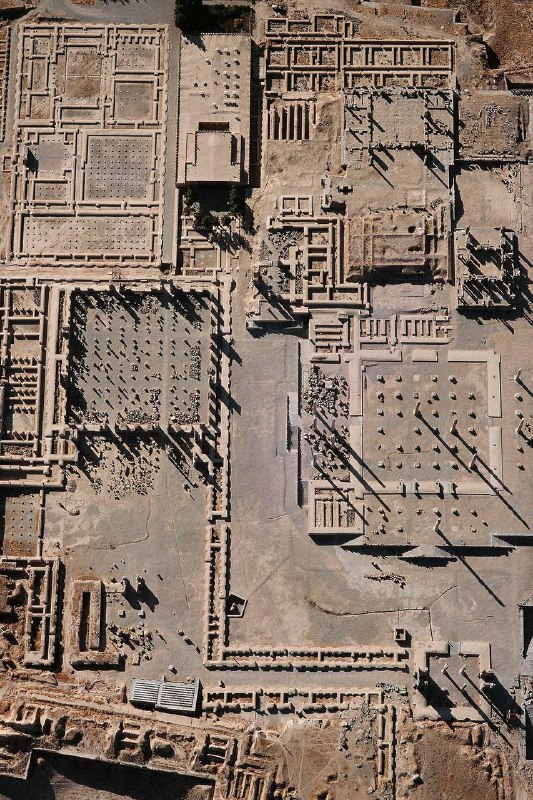
A bird's-eye view of Persepolis, which was the capital of the Achaemenid Empire between 550 and 330 BCE.
Female figure
Iran, possibly from Susa٫ ca. 1500–1100 B.C٫ Elamite.
چو آن دادگر شاه بیداد گشت
ز بیدادی کهتران شادگشت
بیامد فرخ زاد آزرمگان
دژم روی با زیردستان ژکان
ز هرکس همی خواسته بستدی
همی این بران آن برین بر زدی
بیاراست بر خویشتن رنج نو
نکرد آرزو جز همه گنج نو
چو بیآب و بینان و بی تن شدند
ز ایران سوی شهر دشمن شدند
PAID PROMOTION: @Globaladz