ECE - Electronics and communication engineering

This channel is redirecting postsform several subreddit feeds using bots.
Embedded Subs :- https://t.me/r_ece/38

Web3 platform that empowers users with seamless earning opportunities. Our mission is to make life changing rewards accessible to everyone in just minutes a day
Play🕹️: @realyescoinbot
Business: @advertize_support
Last updated 1 year, 8 months ago

Fast transfers & trading, send meme gifts 🎁 and earn 100x returns — fun and flexible crypto app!
Incubated & invested by Binance Labs

Https://grandjourney.io
Last updated 1 year, 9 months ago

Job market in Europe
Nowadays, my observation is job market in Europe is not good because big companies like ADI, TI, Renesas etc. are selecting their employees in India and shifting their businesses for reducing the costs. Some of these companies are closing their offices in Europe. What do you think about this situation?
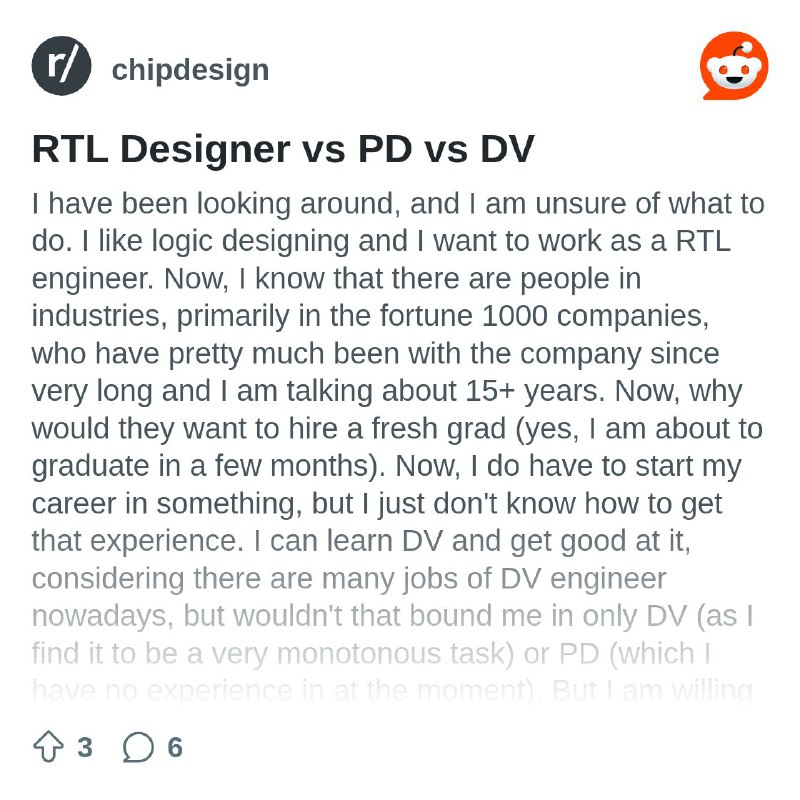
RTL Designer vs PD vs DV
I have been looking around, and I am unsure of what to do. I like logic designing and I want to work as a RTL engineer. Now, I know that there are people in industries, primarily in the fortune 1000 companies, who have pretty much been with the company since very long and I am talking about 15+ years. Now, why would they want to hire a fresh grad (yes, I am about to graduate in a few months). Now, I do have to start my career in something, but I just don't know how to get that experience. I can learn DV and get good at it, considering there are many jobs of DV engineer nowadays, but wouldn't that bound me in only DV (as I find it to be a very monotonous task) or PD (which I have no experience in at the moment). But I am willing to put in the effort and time and grow to be a good RTL engineer.
My ultimate goal is to create my own companies but I want to experience how these things work. I just want to be on the right direction. I just have so many questions and I am so overwhelmed by everything. If anyone in the industry, for a long time and experience, is in any of these domains, aforementioned, can take out their time, I would really love to ask you guys questions and really want to be pointed in the right direction.
Please do reach out in the comments or DM me as I am totally lost and want to figure things out.
Appreciate any advice or suggestions.
A Senior Electrical Engineers (Industrial Power Conversion) Initial Thoughts On 12V-2x6 / Connector-Gate
I have approximately a decade of experience in product development mainly in commercial & industrial power conversion in the range of 10-1000 kW. I have done a lot of testing and certification work, including items such as short-circuit testing (>1000 A), touch current testing (see if it would kill you if you disconnect the earth wire), bad connection testing (unscrew terminals with insulated tools whilst wearing arc-flash protection, whilst running at full power), and so forth. Tests that really could kill me if done incorrectly - so I am careful and conservative. Despite this, I am not an expert in PC components and have not done a deep-dive on this.
Requirements
From a high level I think we need to start by thinking about what these cables are for.
Functional:
- Deliver ~600 W at ~12V from the power supply to graphics card for further conversion, as required.
- Have acceptable losses.
Users:
- The users will be system integrators (large and small) as well as non-trained, non-qualified, lay-persons, building their DIY PC.
- Put simply the users may not know what they are doing and may use excessive force, excessive insertion cycles, may not plug in cables all the way, and so forth. To a certain extent, the cables need to be idiot proof, for example making a click when inserted fully or having a nice tactile feel.
Operational Environment:
- Potentially poorly maintained consumer electronics that may be filled with dust.
- Transportable consumer electronics with vibrations.
- Potentially cramped, poorly designed, consumer electronics.
- High ambient temeratures of maybe up to around 50-60°C
- Users may mix-and-match cables made by different manufacturers.
Safety:
- Under these conditions the cable should remain safe.
- If a cable is damaged until it's not safe then it should be visibly damaged (as opposed to invisibly damaged), and/or the the system should detect the failure.
Does it meet requirements?
No - given the very public failures we have seen. These cables should not be failing like this. Period.
I am not sure where the failure is specifically. I am not sure I care about the specifics. Put simply, I don't think the cables were designed, verified, and then validated against the realities of how these cables are actually being used. In other words, they put all their effort into designing the smallest most powerful cable and ignored or were not aware of other considerations. Then they made the same mistake a second time, which is potentially incompetence.
Further Comments:
-
My own experience with this connector is that it requires excessive insertion force, is difficult to tell when is fully inserted, and is difficult to grip. Whilst this may be acceptable for a production line, given the users of the product, this is insufficient. The older connectors were much more user-friendly from this perspective. This isn't rocket science - it's a power cable - it should be easy to plug in.
-
When paralleling multiple pins like that, the resistance of each pin and cable will vary somewhat. It is likely common on the RTX 5090 for some pins to be above their electrical rating. Even in a laboratory environment, paralleling cables like this is usually not preferred for this reason, unless de-rated. In our lab, I would not sign-off on 12 pins paralleled pins running at ~85% of their rating.
-
Low safety margins isn't necessarily a problem provided the electrical specification already takes into account some of the things that would otherwise drive a high safety margin.
-
Sense-pins or monitoring the current of each pin shouldn't necessarily be required, if the power pins are appropriately constructed and rated. Remember, this isn't a nuclear reactor or rocket science. It's a power cable. Whilst I am not against sense-pins or current monitoring each pin, poor electrical design with sense-pins is definitely the wrong approach.
-
Fire prevention starts with good electrical design. Poor
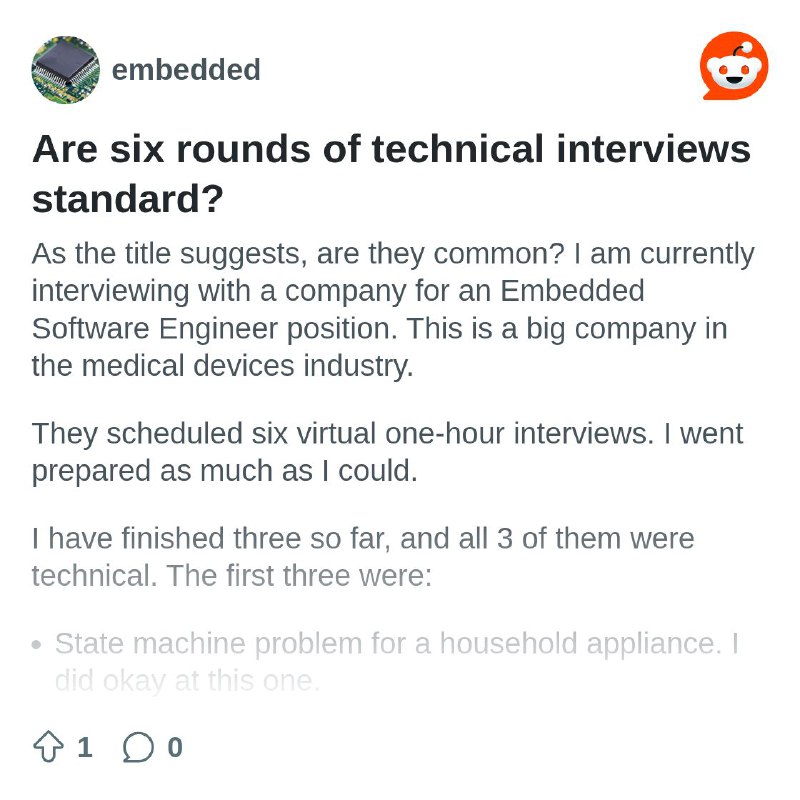
Are six rounds of technical interviews standard?
As the title suggests, are they common? I am currently interviewing with a company for an Embedded Software Engineer position. This is a big company in the medical devices industry.
They scheduled six virtual one-hour interviews. I went prepared as much as I could.
I have finished three so far, and all 3 of them were technical. The first three were:
- State machine problem for a household appliance. I did okay at this one.
- Find the bugs and fix them. I did well in this round. The interviewer said that I solved the problem and, if anything, my code readability was an issue, but they didn't care about it.
- They were two Leetcode questions, and I flubbed them very severely. I didn't solve one of them, but I explained how I would solve them.
I did answer the Embedded C questions correctly, but I feel awful about not doing well in the third round and am terrified of the remaining three rounds.
I already know the outcome of this interview, but I want to fix certain things before I try again in the future.
Is it common for all 6 to be technical interviews? I am asking to revamp my interview prep and improve in the areas I need to.
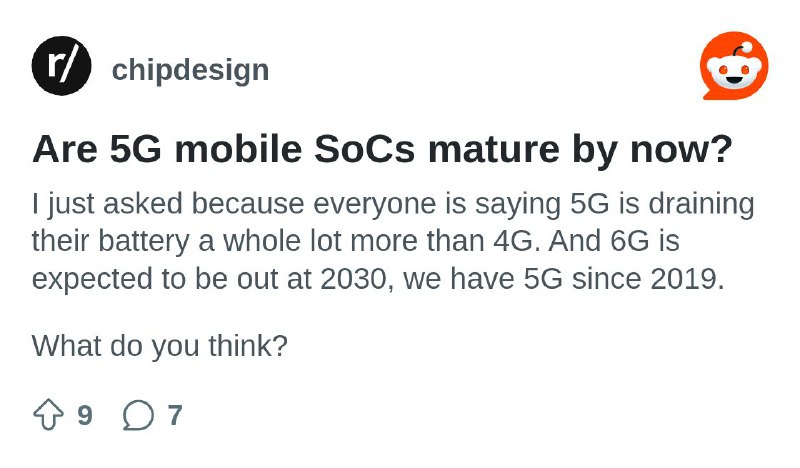
Are 5G mobile SoCs mature by now?
I just asked because everyone is saying 5G is draining their battery a whole lot more than 4G. And 6G is expected to be out at 2030, we have 5G since 2019.
What do you think?
![[Gamers Nexus] NZXT Says We're "Confused"](/media/attachments/r_e/r_ece/37706.jpg)
[Gamers Nexus] NZXT Says We're "Confused"
https://youtu.be/DAANNGvMANM
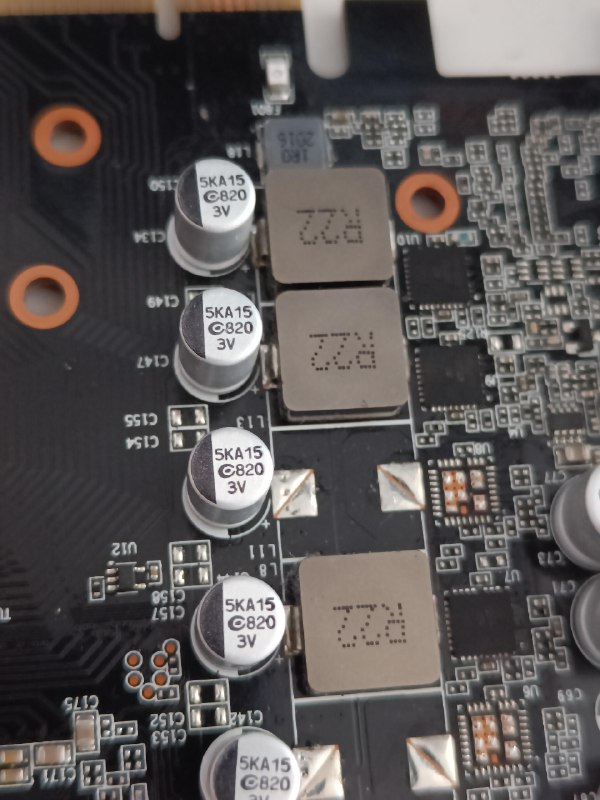
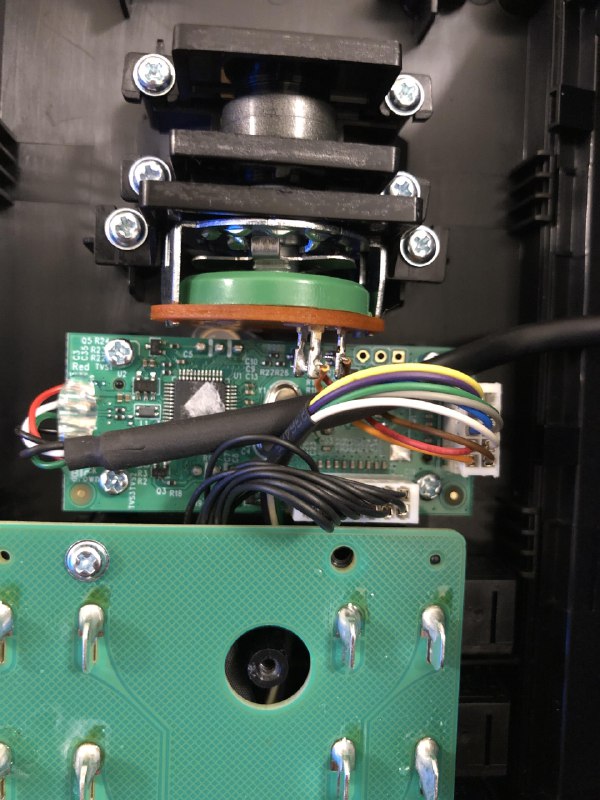
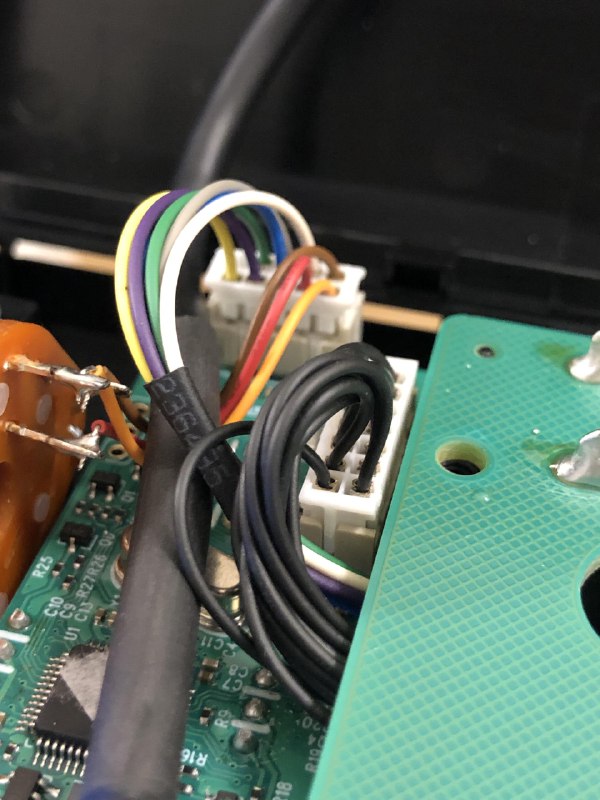
820uF 3v Capacitor. Replacement needed?!
https://redd.it/1h3a2dm
@r_ece
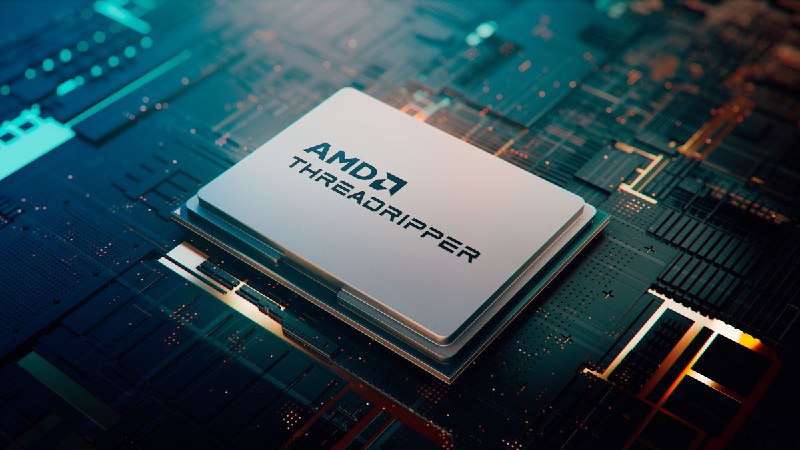
Threadripper 9000 CPUs spotted with 16 to 96 Zen 5 cores — Shimada Peak expected to max out at 350W
https://www.tomshardware.com/pc-components/cpus/threadripper-9000-cpus-spotted-with-16-to-96-zen-5-cores-shimada-peak-expected-to-max-out-at-350w
Web3 platform that empowers users with seamless earning opportunities. Our mission is to make life changing rewards accessible to everyone in just minutes a day
Play🕹️: @realyescoinbot
Business: @advertize_support
Last updated 1 year, 8 months ago
Fast transfers & trading, send meme gifts 🎁 and earn 100x returns — fun and flexible crypto app!
Incubated & invested by Binance Labs
Https://grandjourney.io
Last updated 1 year, 9 months ago